
With the city’s Coca-Cola plant leaving in the near future, the Northampton City Council elected to keep the same water and sewer rates as the previous year.
Photo credit: Northampton Open Media
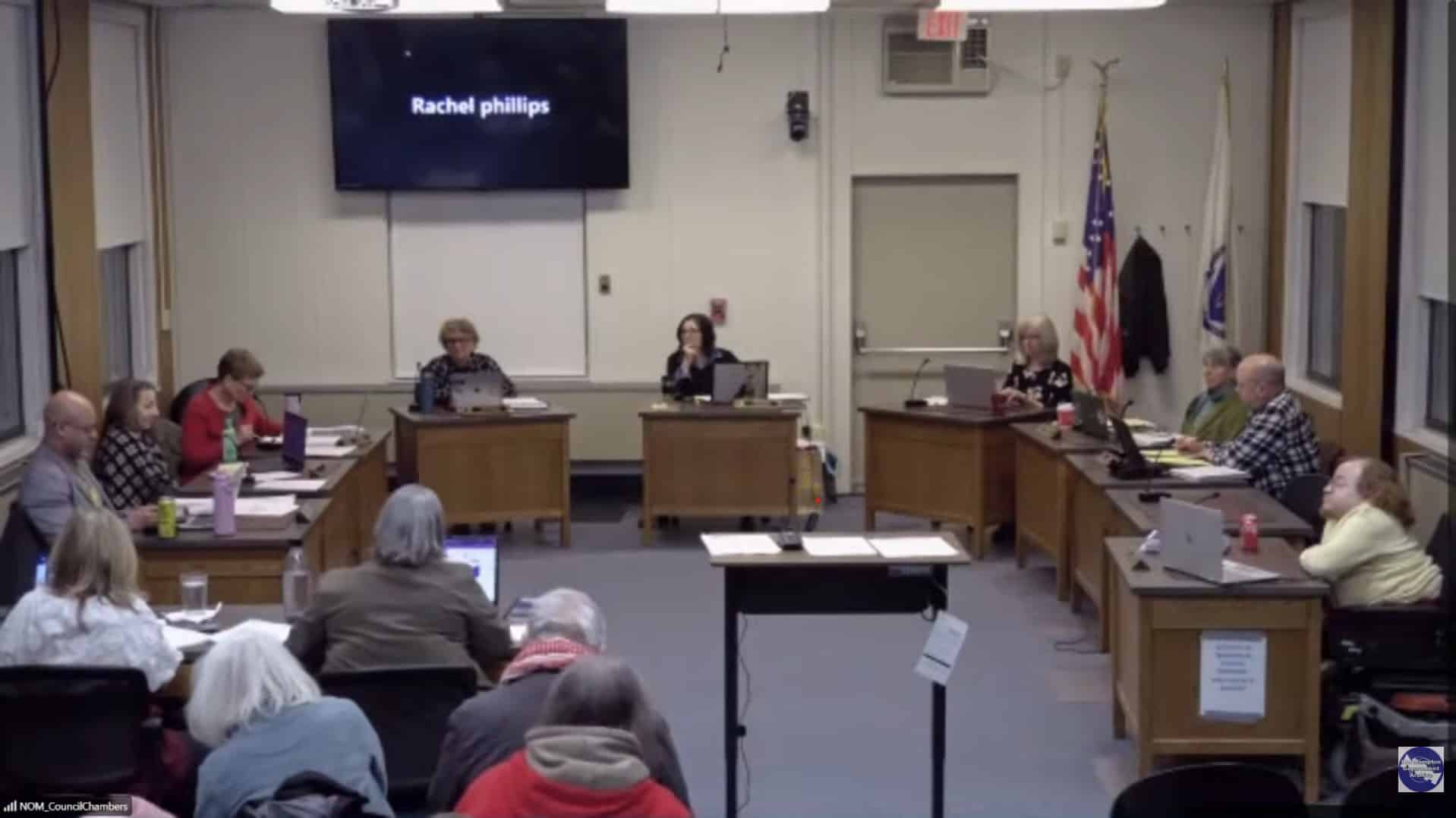
NORTHAMPTON — During its March 19 meeting, the Northampton City Council unanimously approved an order to maintain the same water and sewer rates from the previous year for fiscal year 2027.
The amount resident users pay is based on the size of their pipe. Most users in Northampton have a 5/8-inch or 3/4-inch pipe. For users with a 5/8-inch pipe, the water charge will stay at $47.45 for each quarter of the year, while users with a 3/4-inch pipe will see their water base charge stay at $71.25 per quarter.
For sewer rates, the quarterly base sewer charge for users with a 5/8-inch pipe and with 3/4-inch pipe will remain at $28.85 and $36.06, respectively.
The council elected to maintain these rates as the Northampton Coca-Cola bottling plant continues preparations to exit the city.
Back in 2021, the plant in the Northampton industrial park announced that it would cease operations in the city by the summer of 2023 after serving in the city since the 1950s. The plant has since delayed its departure multiple times and most recently indicated they may remain in Northampton through December, according to DPW Director Donna LaScaleia.
“Coca-Cola’s announcement in 2021 that they were going to cease operations in the city by the summer of ’23 required that we study alternative ways to replace their revenue. They were the single biggest water and sewer customer in the city, a full 25% of both the water and sewer enterprises, so this announcement was really devastating,” said LaScaleia during the meeting’s public hearing on March 19.
This led to the implementation of new base rate fee structures in both water and sewer enterprises, which began on July 1, 2023. Since this change was made, costs have shifted to residents, with the average residential household seeing a $128 annual increase to their water bill and a $115 annual increase to the sewer bill.
LaScaleia explained that FY22 was the last year of stable operations at the Coca-Cola plant; by FY23, usage began tapering. When building the budget for FY24, LaScaleia explained that the DPW began anticipating $0 in revenue from Coca-Cola to the budget, per its announcement of departure. The goal has been to shift the lost revenue to base charges in order to remain at a consistent revenue level.
With Coca-Cola’s revenue stream greatly diminished and highly unpredictable, LaScaleia shared that the city has found success in this effort.
“We shifted their lost revenue quite successfully … All we were trying to do is make up for their lost revenue in the best way possible with the least terrible impact to the rest of the city,” LaScaleia said.
She added, “As everyone is aware, Coca-Cola’s departure has been delayed, and since 2024, we have received about $2 million in what I’m calling unanticipated revenue. For FY26, we’ve received about $400,000 year to date. The reason I’m using the word unanticipated is because when we build the budget, we have to prove revenue to the Department of Revenue. So, if Coca-Cola tells us that they are leaving on a certain date, we have to believe them, and if we don’t, then we continue to collect that revenue, but we cannot build a budget based on, well, ‘we don’t really think you’re going to leave.’”
Since they began budgeting $0 for Coca-Cola in FY24, the city has retained the revenue through the sewer base charges, according to LaScaleia.
With this unanticipated funding, LaScaleia highlighted various projects that have benefited from additional funding.
“In January, this council approved several transfers from retained earnings into our capital projects, and this gives us greater flexibility to address deferred maintenance, and it also relieves pressure on the budget I need to build for the coming year,” LaScaleia added.
The plant has worked in an increasingly diminished capacity since its announcement to leave, and now is only using 14% of the city’s water usage as of FY26, compared to 25% during the height of operations.
“Even though they remain in the city, it’s important to note that they’re not operating at anything close to previous levels,” said LaScaleia. “I think there’s a lot of community commentary that Coca-Cola is still here, and yes, Coca-Cola is still here, but in a greatly diminished capacity.”
When the conversation opened to the public, one resident asked if the retained earnings could be given back to residents who have been paying more through the base rate changes, or if a fund could be established that focuses on water and sewer main breaks with this extra money. LaScaleia explained the DPW has stabilization funds within the enterprise where, in the past, they have actually transferred the excess revenue out of retained earnings into stabilization.
“Those stabilization funds are actually going back to the ratepayers this year in the sewer enterprise. We are going to transfer out of stabilization in order to balance the sewer enterprise budget and not raise rates this year, and that has always been part of the strategy,” said LaScaleia. “In terms of appropriating overages to specific things like water main breaks and sewer main breaks, that’s actually what the council did in January when we came to you and said we have these retained earnings, here is the value, could you please appropriate this money to water main replacement. That’s the account I use to pay for water main breaks, so that’s actually already happening, and it just happened in January.”
Ward 1 Councilor Gwen Nabad asked LaScaleia if she thinks Coca-Cola’s delayed departure has enabled the city to consistently keep rates where they’ve been the last few years. LaScaleia said she thinks the Coca-Cola plant’s continued operations in the city has delayed a conversation around rate increases.
“I think it’s always difficult to have a conversation around what percent are we looking at to increase usage rates. But I think Coca-Cola’s continued operation has enabled us to feel confident that we are going to be able to balance our capital needs and the operating expenses of the enterprise. It has been a surprise to us, and it is not necessarily the way we want to operate … We have held firm and not changed anything, and again, because that’s one of our goals, stable financials and stable rates for people.”
Sciarra added that “Every year, Director LaScaleia, [Finance] Director [Charlene] Nardi, and I have at least a couple intense conversations about this. I’m very sensitive to the fact that Coke is still here and that we are still getting revenue. I think, as Director LaScaleia has laid out, it’s not meeting the needs that we have in these enterprises. It has delayed us talking about rate increases because I know that it peeves people. They [Coca-Cola] have told me many times they’re leaving, and it’s very frustrating. As Director LaScaleia said, we have to take them at their word because we have to prove revenue to DOR.”