
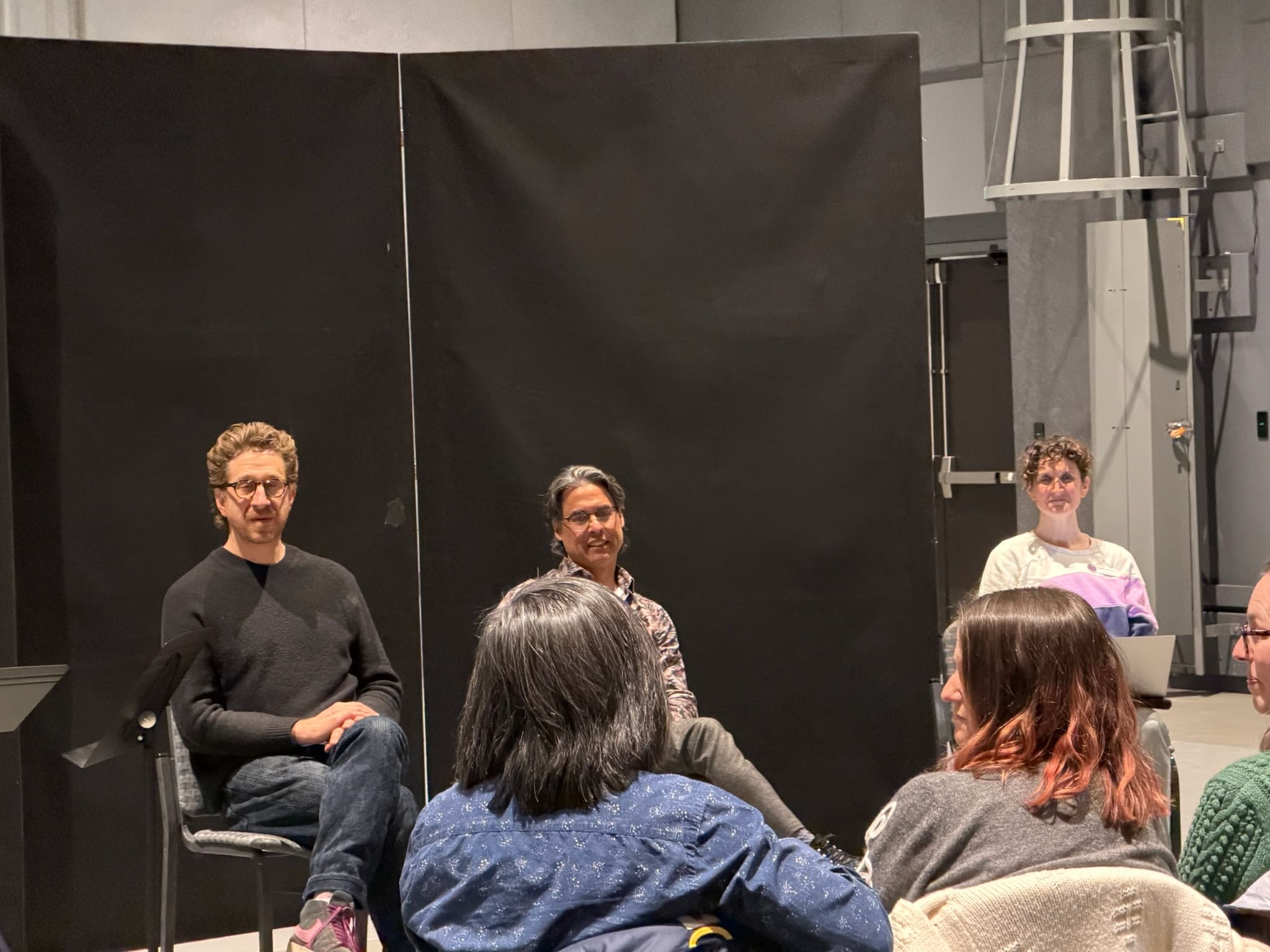
(Left to right) Director and Dramaturg Daniel Goldstein, writer Sean Barry, and stage directions reader Sarah Marcus engage with audience feedback following presentation of Barry’s ongoing work, “Harry Truman and the Volcano” at the PIC’s Plays in Progress series 2026 opening night on March 1.
Photo credit: Play Incubation Collective
NORTHAMPTON — Play Incubation Collective’s 2026 play development series is underway, giving playwrights the opportunity to receive direct feedback on their ongoing work from theater players and fans.
Play Incubation Collective, or PIC, is a local launchpad for new theatrical work that nourishes the community and fosters civic dialogue. One of the highlights of PIC’s work is the annual Plays in Progress Series, or PIPS, which kicked off on March 1.
Founded by Sarah Marcus and Rachel Hirsch, PIC was created to change the landscape of new play development by eliminating the traditional gatekeepers and letting the playwright spearhead their vision with the support of their collective multidisciplinary theater-makers.
PIC initially began this work in 2019, shortly after its founding, when private gatherings were held for local playwrights and actors to work through their works in progress. As they’ve continued that work over the last seven years, the series has established a unique opportunity for the local theater scene to get, as well as give, firsthand feedback and reception on their work as it develops.
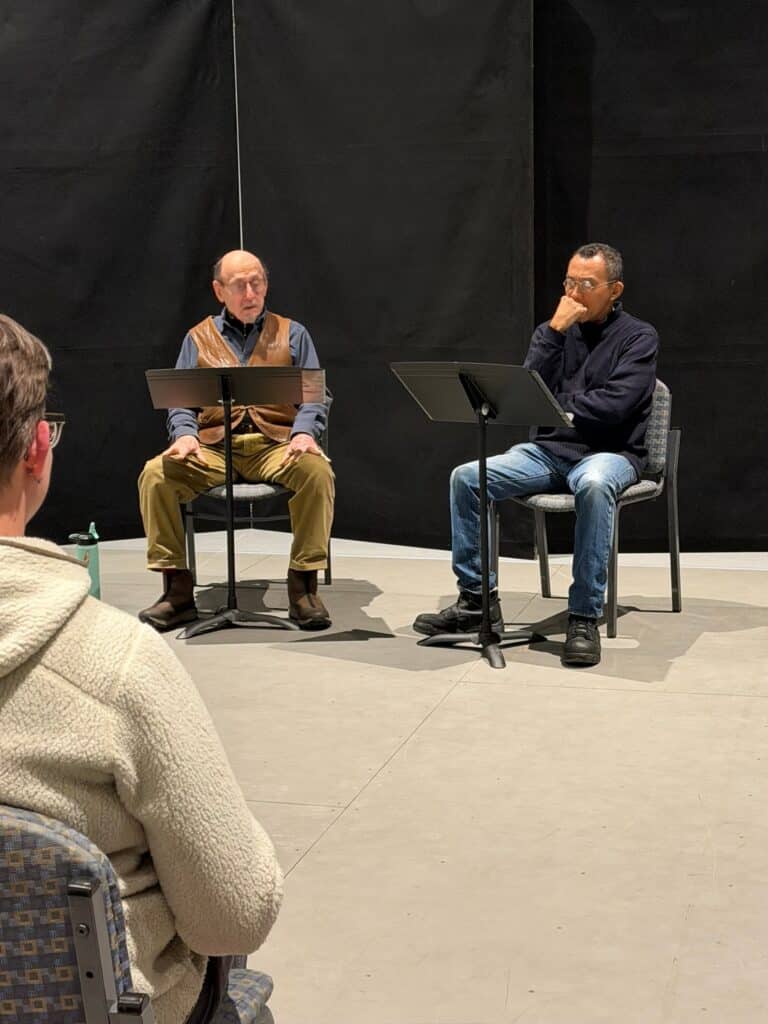
Actors Ray Birk and Ron Domingo led the run through of an ongoing work during PIC’s Plays in Progress series that began its 2026 on March 1. Photo credit: Play Incubation Collective 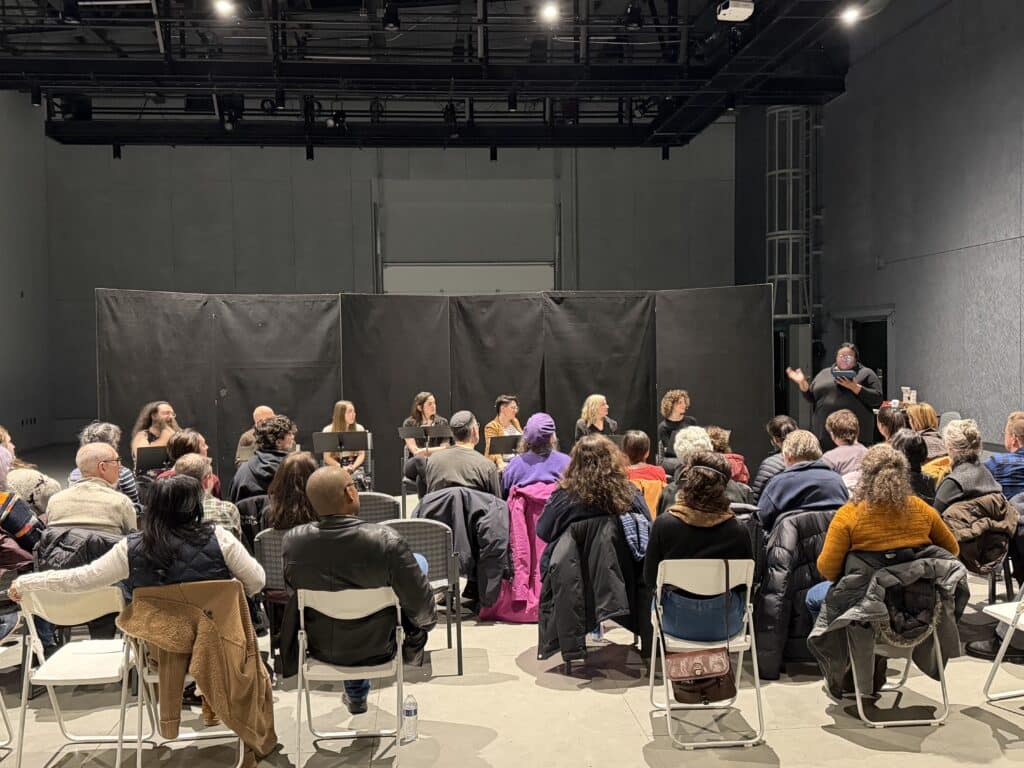
A look at the audience turnout from the last reading of 2025, “Vashti Says No,” by Tayla Kingston. Photo credit: Play Incubation Collective 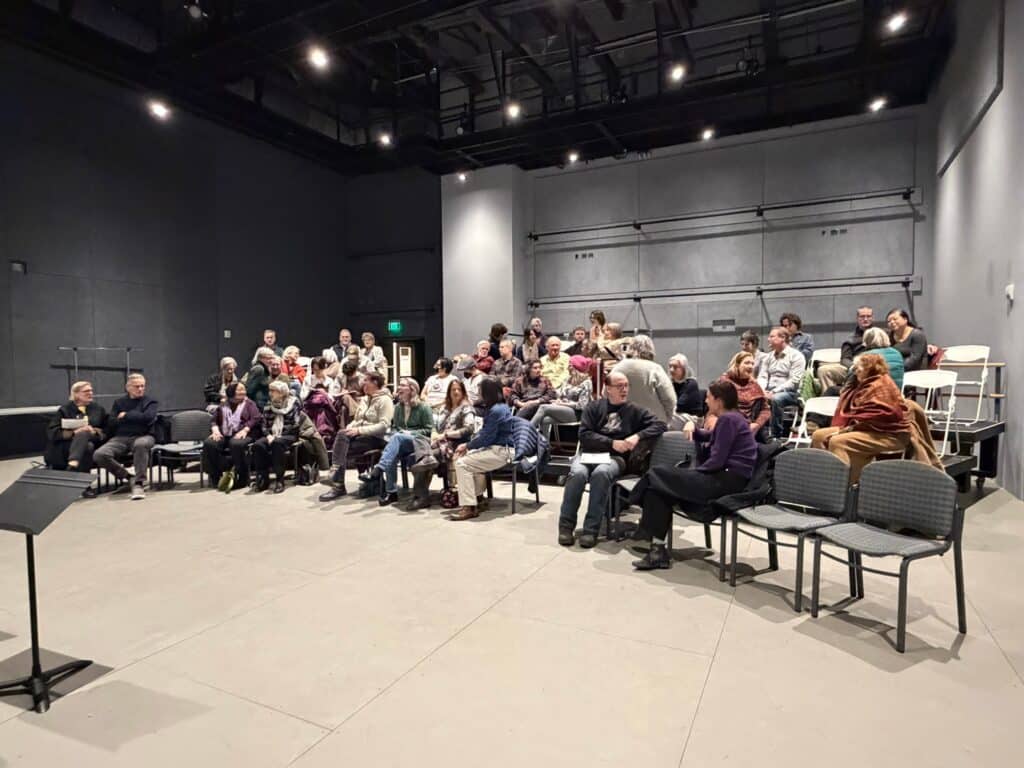
March 1 was the date for the first Plays in Progress reading for the 2026 season and the event saw an audience of about 50 people turn out. Photo credit: Play Incubation Collective
“We saw an opportunity to create more work and more collaboration, and more paid opportunities for the people that live out here,” Marcus told Reminder Publishing. “It was just an opportunity for actors and writers to gather and for writers to get that early stage feedback when they’re working on something that’s still very much in progress.”
These readings at the Workroom inside the Northampton Center for the Arts feature brand new work from local playwrights that are read by local actors in front of an audience. Most readings will be followed by a short discussion, where audience members give feedback to the playwrights about their new work to aid its future development.
Six new plays will be given public readings this year, and over 50 local theater artists will be involved throughout the year and paid for their work. The 2026 PIPS dates are as follows:
- April 12, PIC PIPS “Iris,” by Olivia Clement Finch
- May 3, PIC PIPS “Trying,” a screenplay by Morgan Tabb
- Sept. 6, PIC PIPS “The Voyage of the August,” by Wynn MacKenzie
- Oct. 4, Development Workshop “Lucky Strike,” by Foster Finch Schrader
- Nov. 15, Incubation Residency “The Opheliet Project,” by Maizy Broderick
Each public reading begins at 7:30 p.m. inside the Workroom at 33 Hawley. The series of events is free to the public, but a sliding scale ticket option is encouraged to support PIC’s work. More information is available at www.playincubation.org/script-development.
Marcus called the series an exciting opportunity for the community to not only come together in support of the community’s vibrant theater ecosystem, but to participate in the future of theater creation. With direct feedback from an audience made up of fellow writers, directors, actors, and just fans of theater, the setting created through this series has paid dividends for playwrights during the creative process.
“Something that is really important to us is that we’re really providing a very accessible space for writers at a lot of different stages. So, we’ve worked both with very emerging writers, writers in college, or [those] who are writing their first or one of their first plays, and having them in that sort of safe space to really experiment,” said Marcus. “We also bring other people in so that they can have a dramaturg, because that’s somebody who helps work with the playwright and asks important questions to help the development of the play. We’ve brought stage managers, directors, designers, sometimes theater professors in the area, that can help shed light on a certain subject matter.”
The audience feedback component has also helped expand the program, creating an opportunity for community gatherings over a shared community passion for the arts. Since joining the Workroom Cooperative at 33 Hawley, where different artists and organizations — including PIC — share the space at a subsidized rate, the setting for the Plays in Development Series has only grown as part of a healthy arts environment.
“Some audience members are just people from the community who really enjoy being in the room and getting to be a part of new plays, and so we see that just as an opportunity, honestly, for civic dialogue and engagement, to be together and be talking in a way that builds connection and community for the people that come,” said Marcus.
Following the presentations of their plays in progress, participants ask the playwright specific questions that are meant to aid the development process. The dramaturg helps lead the questions around areas that will help the playwright in their next phase of development, based on initial discussion and feedback following the presentation.
“We’ve heard, sometimes the best thing is just being in the room with the audience. The writers are there noticing what the audience is laughing at, when are they getting distracted or confused? When are their minds wandering? When is everybody kind of collectively holding their breath and super engaged?” said Marcus. “That gives the writer so much information, just watching an audience watch their play.”
Marcus said the first event of the series on March 1 was another success, and the evening saw about 50 people come out. Looking ahead to the rest of the PIPS 2026 schedule, Marcus said there are more exciting and creative nights still to come.
“It can be a lonely endeavor to just be writing on your own and kind of sending your plays out into the world and not getting to hear anything back, and so we’ve heard from many playwrights that PIC really provides them a creative home where they really feel like this is their space to be kind of surrounded by creative peers, and to have the benefit of time and to be paid for the time to just be working on it in the early stage,” added Marcus. “There are writers who have said their play wouldn’t have been able to be written or put out into the world if someone else didn’t say, ‘yes, we’re giving you the time, the money, the space, the resources to work on it.’”