
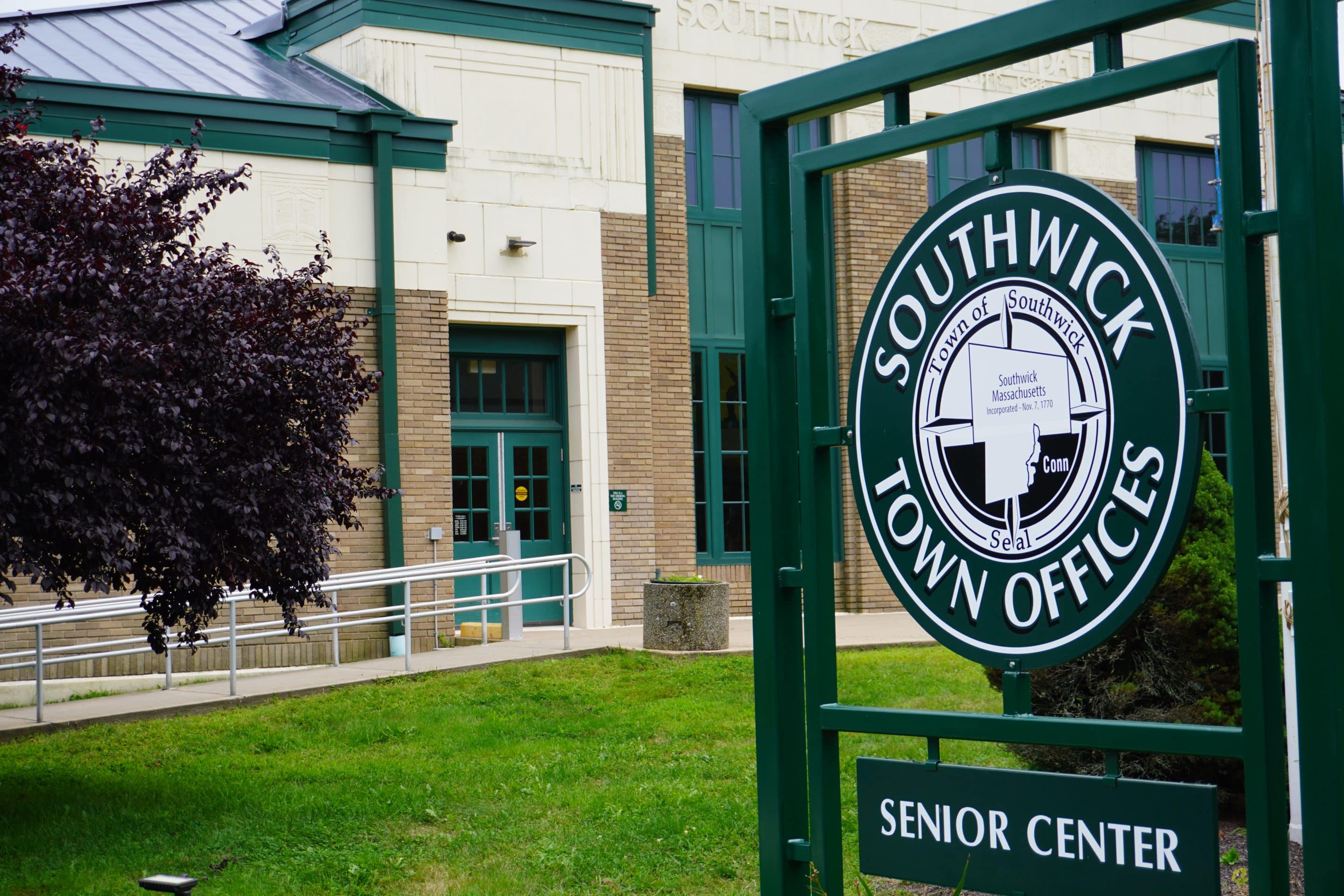
SOUTHWICK — The discussion held by the Select Board before it decided to support having Town Meeting vote up or down on implementing a meals tax in town might be described as snippy.
“No one’s in favor of adding a tax,” said board member Diane Gale, who supported the tax, during the brief debate on the issue at the March 9 meeting.
That prompted a sharp response from board member Douglas Moglin, who was a “solid no” on the proposal.
“Except you two,” he said, referring to Gale and board member Russ Anderson, who also supported the tax.
The idea of imposing a meals tax in town has infrequently come up as a topic of discussion over the last two years, but it’s largely been the town’s Economic Development Commission pushing it.
During the EDC’s last meeting, which Anderson attended as the commission’s liaison, commission Chair Greg Deily was unequivocal in his support.
“You’re not going to decide where to go based on 75 cents on $100,” said Deily at that February meeting. He also attended the board’s meeting on March 9 to again advocate for having Town Meeting decide.
The state has a 6.25% sales tax on prepared meals, which is often increased by a 0.75% local option tax, bringing the total to 7% in most areas. The tax applies to restaurants, cafes, food trucks and prepared food at grocery stores. There are exemptions like food sold by weight, deli meat or drinks in unopened containers.
Deily pointed out that every town adjacent to Southwick had a meals tax.
“In fact, every other town our size and larger has opted into this, so we are the only one leaving it on the table,” Deily said, which prompted another sharp retort from Moglin.
“Maybe that’s why people are coming here,” he said, which elicited a quick response from Gale.
“Yeah, right. To avoid it, sure,” she said, which drew Anderson into the exchange.
“Pizza’s seven cents cheaper,” he said.
“But they’re going to pay more for gas here, so there,” Gale continued.
“That’s true,” Anderson said.
Before that exchange, Gale explained why she supported the tax.
“We have talked about this a few times in the past. With growing costs that are out of control — and we can’t control many of them — I think it’s time to adopt the meal tax, at a minimum,” she said.
Anderson, as Gale said earlier, stated that no one likes adding taxes “to anything.”
“But with that said, the state’s not exactly going to help us out,” he said.
He added that he frequents many of the restaurants and diners in town, and while acknowledging it was an uneducated guess, he is seeing more people he doesn’t recognize.
“I would think 75% of people that are going to Roma’s or to Blackboard [Congamond] are not from town,” Anderson said.
Deily said at the meeting that while he couldn’t get exact food and beverage sales for Southwick, he estimated that levying the tax would generate between $125,000 and $150,000 annually.
The town’s chief administrative officer, Nicole Parker, said the state’s Division of Local Services, which helps manage municipal finance by providing guidance, oversight, and training to local officials, gave her the same estimate.
Gale said if the tax isn’t adopted by Town Meeting, there is a possibility the town will cut back on services.
Anderson was more direct in his forecast for the town’s financial situation without the meals tax.
“So, which is it? Pick what you want. Less schools. Less fire. Less police. Less [snow] plows … it’s gonna be something,” he said.
Before Gale asked for a motion to have Town Meeting decide the issue, Parker gave her “spiel.”
“If you’re going to spend $100, and we ask for .75 cents extra, would that be such a burden? And to get $120,000, $150,000, or even more in revenue each year,” she said.
Anderson and Gale voted in favor of having Town Meeting decide. Moglin voted against it.
The possibility of levying a short-term rental tax — stays of 31 days or less — was brought up at the meeting.
Moglin didn’t think having the town pursue that as a revenue option was worth it.
“There’s not enough of them to be even consequential. Just doing the paperwork will cost more than we bring in,” he said.
The state already collects a 5.7% occupancy tax, including in Southwick.
The town could adopt a local tax of up to 6%.