
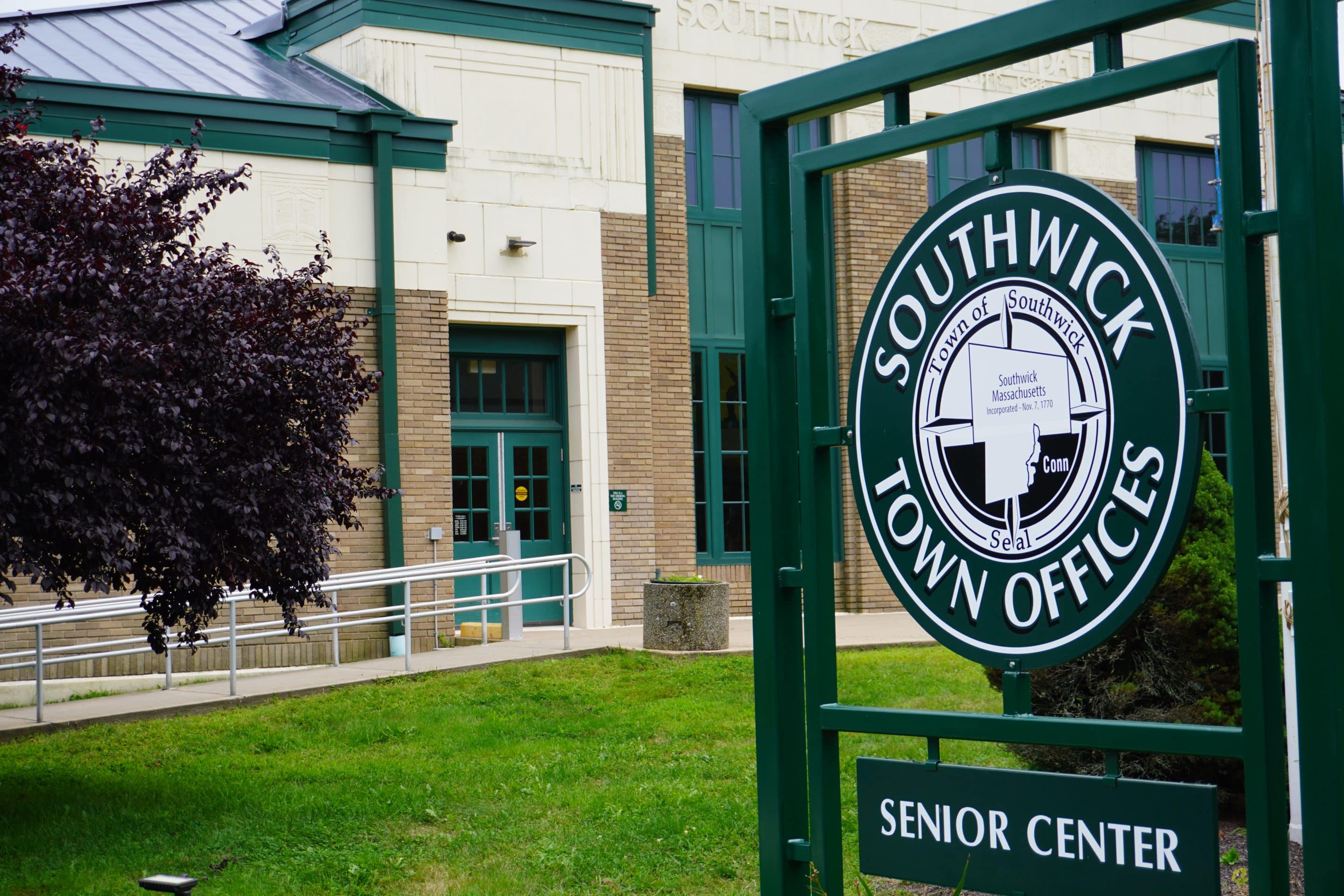
SOUTHWICK — In a motion made by the town to answer a lawsuit filed against it by Southwick Care LLC, it said the limited liability company didn’t exhaust all “administrative avenues” before filing the civil lawsuit in Hampden Superior Court, and therefore, should be dismissed.
“Southwick Care is a property owner who has paid allegedly excessive water bills between Nov. 19, 2020, and April 2025, but did not avail itself of either of these two administrative avenues,” referring in the lawsuit to Massachusetts General Law in the motion to dismiss filed by Ryan O’Hara of Bacon Wilson PC on behalf of the town on Jan. 29.
In December, Southwick Care filed the lawsuit because it alleges it was overcharged by $333,393 by the town for water, which it paid, and its demands for reimbursement by the town “had gone unanswered.”
Southwick Care countered the town’s argument in its motion before the court, claiming that, essentially, there is no administrative avenue to request a refund for the overbilling, according to the motion filed by Lauren F. Olanoff of the Boston law firm Egan, Flanagan & Cohen.
The facts presented in the lawsuit by Southwick Care indicated that between November 2020 and April 2025, it used 5.1 million gallons of water for its assisted living facility — Southwick Village — that has 58 residential rental units at 802 College Highway.
It alleges it should have been charged $40,798 between those dates.
Instead, between April 2021 and April 2025, the town charged Southwick Care $374,191, “which corresponds to 46.1 million gallons at the tier 3 rate,” which was $8.75 per 1,000 gallons for most of that time.
The town acknowledged overcharging Southwick Care for the amounts listed in the lawsuit.
“The bills for these charges erroneously multiplied water usage by a factor of 10 … [Southwick Care] paid an estimated $333,393 in excess of the water usage and rates it ought to have been charged,” according to the town’s motion to dismiss.
The town described in its motion to dismiss its two administrative remedies for disputes.
“Water users dissatisfied with the charges assessed to them have [two] options for challenging the charges,” according to the motion.
The first is to have the town check that the water meter is accurate during the time of the water usage being billed for, and before the expiration of the time when the rate for such quarter or period is required to be paid, according to the town’s motion.
The town must then conduct a test and provide a written report.
“…if it appears that the meter has not registered within [2%] of accuracy and that person has been charged with, or has paid for, more that he should have been charged with or should have paid for, the amount of such excess shall forthwith be credited to such person or remitted to him if he has paid the same,” according to the town’s motion.
The second way to challenge a water usage charge is to apply for an abatement by filing a petition with the Water Commission by the end of the six-month billing cycle, according to the town’s motion.
If the outcome doesn’t satisfy the applicant, they can appeal to the Appellate Tax Board within three months.
“There is limited decisional law applying these provisions. Taken together, they establish a clear and comprehensive regulatory regime for challenging water charges,” according to the town’s motion.
Citing case law, the town argues that court action can only begin “after all these administrative remedies have been exhausted.”
Southwick Care didn’t elect to follow either procedure, “as a result, it failed to exhaust its administrative remedies.”
It also didn’t file the lawsuit within the “statutory deadlines for administrative remedies,” according to its motion.
Southwick Care countered the town’s motion, arguing that it wasn’t required to challenge the accuracy of the water meter or owe any money on its bill that required a request for an abatement, according to Southwick Care’s opposition to the town’s motion.
“In fact, [the town’s] claim for breach of contract arises not from a claim of a faulty or inaccurate meter, but rather, a billing error whereby the town incorrectly overcharged [Southwick Care] for its water usage and charged [Southwick Care] at a higher rate in violation of the town’s own rate tiering policy,” according to Southwick Care’s opposition to the town’s motion.
In Southwick Care’s original lawsuit, it alleged the town overcharged it by adding a “0” to the end of the actual water meter readings, causing it to be charged for an extra 10 million gallons per bill, totaling 40 million gallons.
It also alleges the town improperly charged its properties’ water usage at a higher “tier 3” rate despite a policy the town’s Water Commission adopted in November 2023, capping rates at the lower “tier 2 rate” for multiple residential rental units.
Before November 2023, for customers using up to 15,000 gallons during six months, the tier 1 rate was $7.50 per 1,000 gallons; for customers using between 10,000 and 30,000 in six months, the tier 2 rate was $8.10 per 1,000 gallons, and for those using over 30,000 gallons in six months, the tier 3 rate was $8.75 per 1,000 gallons.
Southwick Care’s opposition motion also said it couldn’t ask for an abatement or challenge a lien on the property because of an unpaid bill, because “[it] paid all of the water charges assessed upon it by the town, and so no lien was placed [on the property], so the case law cited by the town doesn’t apply.”
“[Southwick Care] claims could not be rectified by the administrative remedies cited by the [town],” according to the opposition motion.
Regarding the town’s allegation that Southwick Care didn’t file the lawsuit within “statutory deadlines,” it cited case law that there is no statute of limitations in the case law the town cites, alleging Southwick Care didn’t exhaust administrative remedies.
The town deferred commenting on the litigation as it is ongoing.