
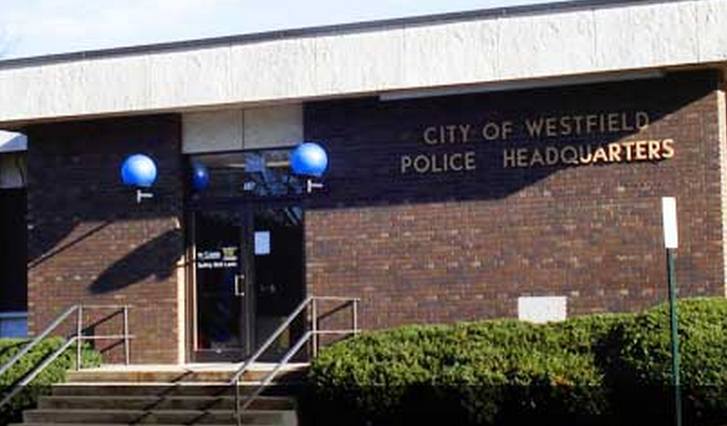
SPRINGFIELD — The city of Westfield and 17 current Westfield Police Department officers have been unable to reach a settlement after the officers filed a lawsuit against the city alleging they should have been paid “regular wages” when attending the police academy.
“At this point, things have stalled,” said Springfield-based attorney Jeffrey Morneau with Connor & Morneau, who has been representing the officers who filed the lawsuit against the city in Hampden County Superior Court in September 2024.
However, he said on Feb. 23 that a settlement is “not off the table.”
The two sides have been in settlement discussions for several months, and in November, both asked the court to hold off on any further action in an attempt to reach a settlement.
On Friday, Morneau and the attorneys defending the city, Boston-based firm Seyfarth Shaw, filed a motion with the court to reinstate the deadlines for filing motions and briefs to the court.
“This is to set up a schedule so there is no further delay,” Morneau said.
In the joint motion, both sides have “differing positions as the appropriate interpretation and application of certain key legal concepts,” according to the filed motion.
Morneau said now the city and the officers will file briefs with the court to resolve those issues.
“We’ve asked the court to decide matters of law and determine who’s right,” he said.
In a related wage-and-hour case lawsuit filed by Westfield Police officer Efrain Luna in U.S. District Court, alleging the city had violated the federal Fair Labor Standards Act by not paying him overtime, both sides have also asked the court for additional time to sort out legal issues before continued settlement negotiations.
“[There are] sophisticated questions about the manner in which the city paid overtime to the police officers. To facilitate their efforts to resolve this matter, the parties have exchanged a substantial volume of data relating to the pay practices implicated by plaintiff’s claims in this matter, which require evaluation by professionals with expertise in quantitative analysis,” according to the federal lawsuit.
That has delayed both from engaging in negotiations, according to the lawsuit.
Both have “continued to confer [and] believe that they have reached at least a preliminary common understanding of the quantitative issues implicated by plaintiff’s claims, and are now in a position to undertake a substantive negotiation,” according to the lawsuit.
They are also assessing whether a mediator may be necessary to continue the negotiations, according to the lawsuit.
The September 2024 lawsuit filed by the 17 officers against the city had three separate complaints referred to as counts.
Count 1 alleged that officers attending the police academy should have been paid the same wages as regular officers since they had been “appointed” to the position of “police officer” and the city was “obligated” to pay regular wages.
Count 2 was that the city didn’t pay the officers regular wages earned within seven days of the end of the pay period while they were attending the academy. The lawsuit is essentially asking the court to find that the officers attending the academy should have been paid at least $21 an hour instead of $19 per hour while enrolled.
And in Count 3, the officers alleged that the city was obligated to pay them because “valuable services were provided to the city” — it is called a claim for quantum merit. Count 3 also says the officers had a “reasonable expectation” of compensation for services, the city accepted the services provided by the officers, and a reasonable person would have expected compensation.
The city, through Seyfarth Shaw, denied the allegations in Count 1 — that the city was obligated to pay the officers regular wages — by questioning the legal conclusions used in the lawsuit.
For Count 2, the city again denied failing to pay the wages earned within seven days of the end of the pay period and denied that the officers were entitled to damages.
For Count 3, the city denied that the officers had provided “valuable services” to the city because the allegation was “vague” and that the officers were paid what was owed to them.
The city also said it acted in good faith and with reasonable grounds to believe it was not violating the law.
It also made a motion to dismiss the officers’ lawsuit, which was denied last May.
In Luna’s lawsuit, he alleges the city hadn’t paid him “time and a half” rates for work in excess of 40 hours in one week since July 2021.
According to the federal Fair Labor Standards Act, law enforcement personnel are exempt from being paid overtime rates if the municipality opts in to what is known as a 29 USC § 207(k) exemption. With that exemption in place, officers must work 171 hours in 28 days, or more than 42.75 hours in a seven-day work period, before an employer must pay the higher rate.
Luna alleges the city has not established or adopted a 207(k) work period exemption, and therefore, he should qualify for overtime rates under the same rules that govern most wage-earners.
The city, through Seyfarth Shaw, answered that allegation and over 20 others in its response, including whether the city had “adopted” or “established” the 29 USC § 207(k) exemption.
“[The city] denies the allegations … responding further … that it did establish an alternative work period under 29 USC § 207(k) exemption,” according to the city’s response.
In one of the complaints in Luna’s lawsuit, he alleges the city is “an enterprise engaged in commerce or in the production of goods for commerce,” which is a required provision of the federal statute that defines which workers are entitled to overtime.
The city responded that it “denies the allegations … because it is not a commercial enterprise and is not regularly engaged in the production of goods.”
As another justification for the lawsuit, Luna alleges he worked for more than 40 hours in at least one workweek, which the city said it was unable to respond to because the allegation is “vague” and that Luna failed to identify any week or weeks he worked more than 40 hours.
According to the city’s response, Luna’s “entitlement to overtime, if any, is based on an alternative work period” as defined by 29 USC § 207(k), “not based on a 40-hour workweek.”