
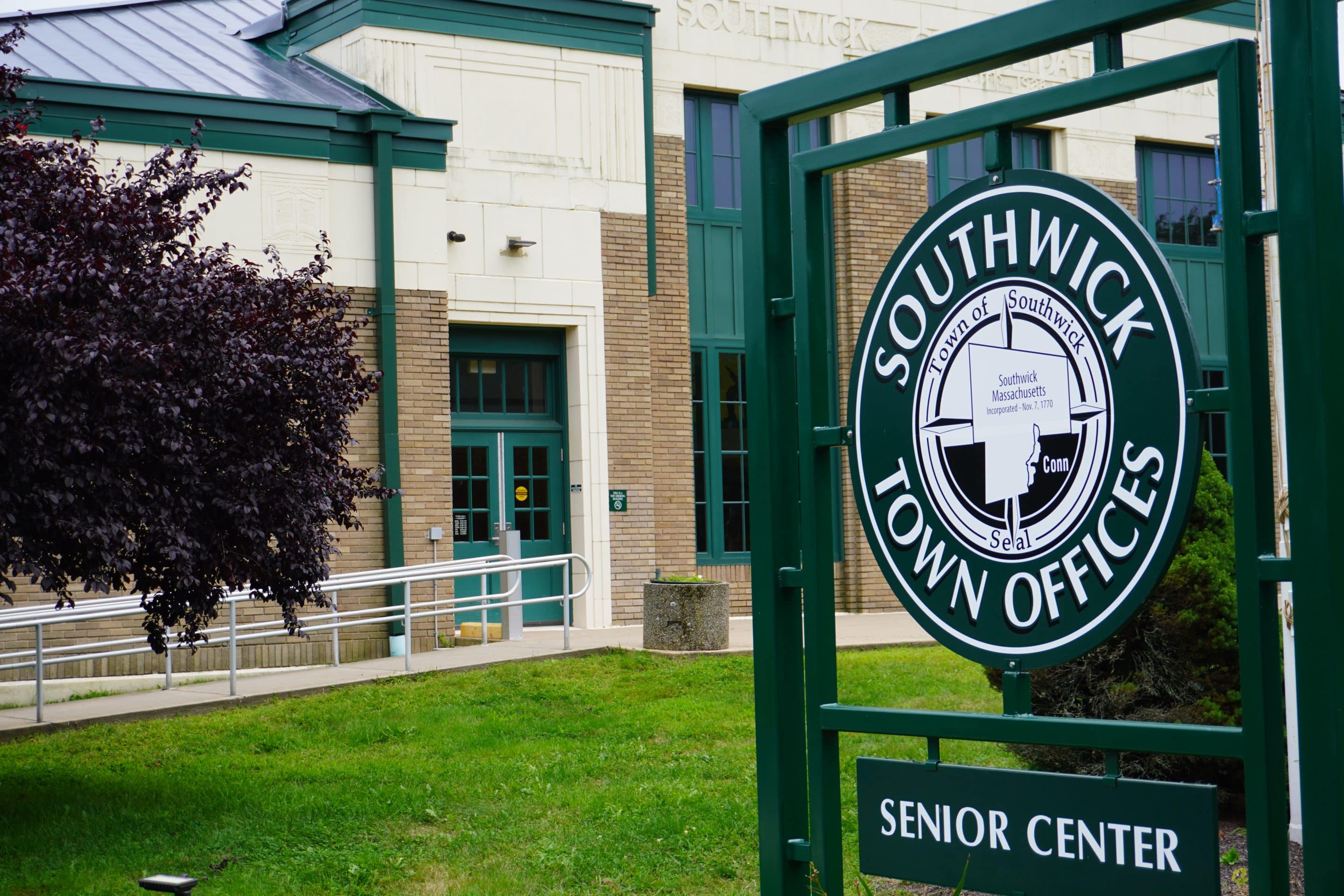
SOUTHWICK — The town is looking to generate additional tax revenue to offset the town’s ever-increasing operating costs and the annual regional district school allocation.
This effort comes after the Select Board approved a contract with an outside consultant to conduct a personal property valuation.
“It’s going to pay for itself,” said Randy Austin, the town director of assessment, about the $26,300 contract the board approved with Real Estate Research Consultants to conduct the valuation.
Personal property in the commonwealth is defined as movable physical items that are not permanently attached to land or a building. Key examples include business equipment, like office chairs, computers and machinery, and furnishings inside a second home or vacation cottage.
Those items are taxable and, too often, Austin said, “doesn’t always get the attention it needs.”
When he was appointed as assessment director last September and began examining the valuations of real property, he found that some of the valuations needed to be adjusted, primarily because of incomplete information on property cards.
After turning his attention to personal property, Austin said he became “concerned.”
He discovered several businesses in town that had claimed to be exempt from personal property taxes but were not.
Austin said the unpaid amount for one of the businesses was only a few hundred dollars, but that it wasn’t “fair to the people who are paying.”
When the town was determining the terms of the tax-increment financing agreement with WGI Inc. before it was approved at May’s Town Meeting, Austin said he had discovered that some of the machinery in the current facility hadn’t been defined as personal property.
After the discovery, he had the valuation done and billed the manufacturing company for $33,000, which it promptly paid, he said.
Before Austin was appointed here, he was an assessor in Greenfield and said its department conducted an inventory of businesses in that city and found 90 that weren’t being billed for personal property.
“We found 90 new businesses and generated an additional $240,000 in revenue for the city,” he said.
Real Estate Research Consultants has been contracted to analyze the town’s current tax data and identify businesses that may not have been paying taxes on personal property or declaring the property exempt.
An example of an exemption is household furnishings and effects.
Other exemptions include farming utensils like hand tools and simple mechanical devices, and “tools of the trade” of a mechanic, according to the state’s Division of Local Services.
However, tractors, combines, balers, and the like are not exempt. Furnishings and effects for owners of second homes are also not exempt, according to the DLS.
RRC will also conduct comprehensive street canvassing and review lists of the town’s new business certificates, according to its contract.
The company expects to examine and evaluate 300 business accounts throughout town and conduct a review and valuation of wireless and cable systems and an appraisal of public utility equipment, such as utility poles and the wires hung on them.
Austin said there are depreciation schedules that reduce taxes levied on equipment over a period of years.
However, while the equipment’s depreciation schedule might end with it at a zero value, Austin said that for personal property purposes, it never goes below 30%.
He said for years, utility companies would value their poles and other equipment at zero and request an exemption. That practice stopped after a 2002 lawsuit filed against a utility company resulted in a decision finding that its equipment could be taxed at its net book value instead of its fair market value.
RRC will have the revaluation completed during fiscal 2027.