
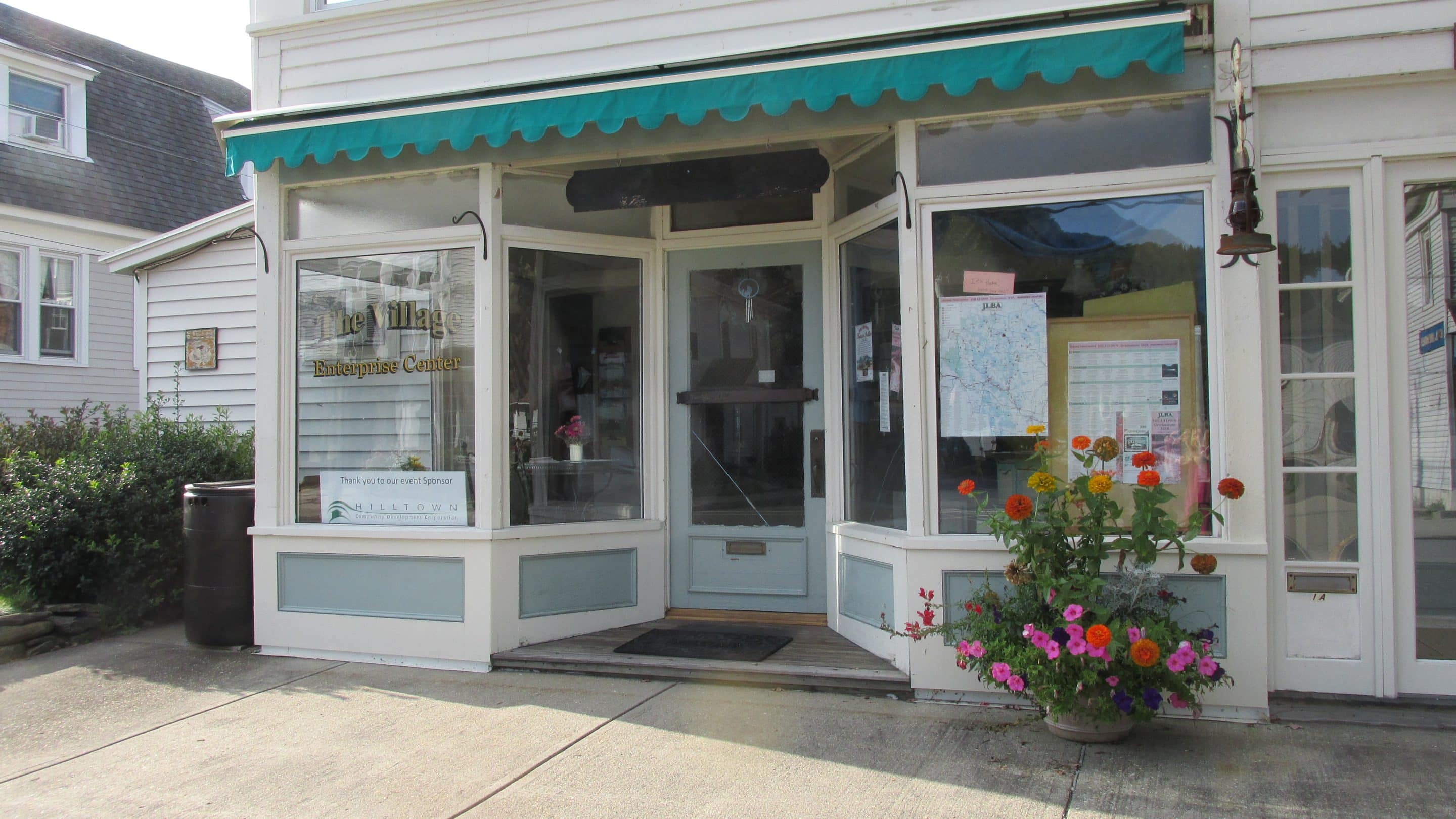
The Village Enterprise Center, 26 Main St. in Chester, is home to the Southern Hilltowns Adult Education Center.
Reminder Publishing file photo
Notably absent in the Healey-Driscoll Administration’s Dec. 19 announcement of nearly $33.5 million in federal Community Development Block Grant awards to support housing, infrastructure, social services and economic development projects in 52 communities across Massachusetts was the funding for Southern Hilltowns’ social service agencies.
“From our smallest hill towns to our Gateway cities and regional hubs, we are listening to local leaders and making sure they have the resources they need to deliver for their residents,” said Gov. Maura Healey in making the announcement.
According to Joe Hagopian, senior planner for the Pioneer Valley Planning Commission, which manages the Southern Hilltown CDBG grant, the application included the following breakdown, none of which was funded.
Southern Hilltowns Domestic Violence Task Force, $45,777; Huntington Food Pantry, $51,480; Hilltown Community Health Centers (for the Hilltown Social Services Project), $73,829; and the Southern Hilltowns Adult Education Center through the University of Massachusetts, $73,578.
Hagopian said the last time funding was not awarded, which he believes was in 2012, agencies were extremely impacted.
“Thankfully, previous grant rounds have carried over funding through the present, so all of the agencies are still receiving funding for the time being,” he said.
“I would also like to emphasize the important work that all of these provider agencies have done — and continue to do. Their staff are extremely compassionate, knowledgeable and truly look out for their neighbors,” Hagopian added.
While the social services were not funded, infrastructure grant awards were announced for Chester and Huntington. Chester will receive $850,000 for Prospect Street Phase 4, and Huntington will receive $850,000 for Blandford Hill Road infrastructure improvements, Stanton Avenue improvement project phase II and ADA self-evaluation and transition plan.
Kate Norton, a communications consultant with the PVPC, said a public hearing was planned on Jan. 12 at 6 p.m. at the Chester Board of Selectmen meeting. She said she believed the primary focus of the meeting would be the infrastructure program that was funded, but to her understanding, they would also be discussing the current status of the ongoing FY24 grant, which has remaining funding for all of the social services. Typically, CDBG grants run a year behind.
Reaching out to the agencies, Laura Gavioli, director of the Huntington Food Pantry, said she had no comment on the loss of funding to the program because she had not been aware of the cut. She said she planned to go to the CDBG hearing on Jan. 12 to find out what was going on.
Gavioli said the food pantry is still operating with the remaining funds from the 2024 CDBG grant. The Huntington Food Pantry saw historic demand for its services throughout 2025.
Monica Moran of the Southern Hilltowns Domestic Violence Task Force agreed that it was bad news about the funding, “and so disappointing.”
“However, we will figure out a way to keep going in hopes that the funding comes through next year — perhaps meeting less and doing fewer projects. A lot of what happens is by members and volunteers. We’ll scale back. We haven’t sorted it out yet. But we will not fold. Too important,” Moran said.
Michele Kenney, program director for the SHAEC through UMass Amherst, was the first to talk about the upcoming cut to adult education programs in the coming year due to the loss of the block grant. She said that with no grant, they will only be able to offer GED HiSet programs and one-on-one business assistance with the funding that remains.
Kenney said the Village Education Center in Chester will remain open. and other classes will be offered as they get volunteers and through Friends of SHAEC. She said back in 2010, they formed the non-profit Friends of SHAEC, a fundraising arm, to allow the adult education center to widen its variety of offerings, and this year they will be looking to increase those fundraising efforts.
Kenney said among the cuts they will have to make is computer help at local councils on aging, which she said is to her the most critical loss. Currently, UMASS Amherst is putting together a request to PVPC for a separate grant for computer help for seniors.
“One of the reasons I think it’s so important to ask for that is the scams and the seniors being taken advantage of,” Kenney said. She said one teacher recently spoke to a couple from Chester who asked her why Yahoo was suddenly charging them $30 a month for their email account. She said the teacher looked into it and found a phishing scam that had entangled them and other people they knew.
“How many other people are getting scammed? I feel it’s important to ask if we can get funding for computer help for seniors. They are vulnerable, and this is their only option,” she said.
Kenney said SHAEC will also be applying for a 2026 CDBG grant.
Kim Savery, director of Community Programs for the Hilltown Community Health Centers, said the loss in funding will impact community health workers, navigators, the Family Center and HOPE programs, which are all reliant on the CDBG funding.
She said they are currently looking for additional funding for their domestic violence outreach program, Hilltown Safety at Home, as the grant from the Massachusetts Office of Victim Assistance has also faced cuts.
Savery said the Southern Hilltowns CDBG funding has played an important role in supporting social services that help residents meet basic needs, navigate systems and stay healthy.
“Losing this funding creates real challenges, particularly in this rural region where transportation barriers, isolation and limited local resources already exist. We want the community to know that this loss does not reflect a reduced need — demand for social services in the hilltowns remains high,” Savery said.
She said while the loss of the CDBG block grant funding is a setback, the Hilltown Community Health Centers remains fully committed to ensuring that residents continue to have access to essential social services. “We are adapting, leveraging partnerships, and pursuing diversified funding strategies to sustain and strengthen these services.”
“Hilltown Community Health Centers has served the hilltowns for more than 75 years, and our mission is rooted in long-term commitment, not short-term funding cycles. Social services remain a core part of our integrated care model, alongside medical, behavioral health, dental and community-based supports. We are prioritizing continuity of services for the most vulnerable residents, including older adults, families with children, people experiencing housing or food insecurity and survivors of violence,” Savery said.
In terms of immediate strategies to maintain services, Savery said they are looking at a three-pronged approach: resource allocation, integration with clinical care and partnership coordination. “I am actively pursuing new grant funding to replace and diversify lost support, including federal and state funding, private foundations and discrete funding streams for each of the programs,” Savery said.
Savery also stressed that Hilltown residents should continue to seek help, and services are still available, and they will work with individuals to connect them to resources.
“No one should assume that help has disappeared; our staff are actively navigating options with each person we serve. We are committed to transparency and will keep the community informed as funding strategies evolve,” she said, noting that this has happened before.
“The hilltowns are resilient, and so is Hilltown Community Health Centers. While funding landscapes change, our commitment to this region does not. We will continue to adapt, advocate, and pursue every opportunity to ensure that social services remain accessible to the people who rely on them,” Savery said.