
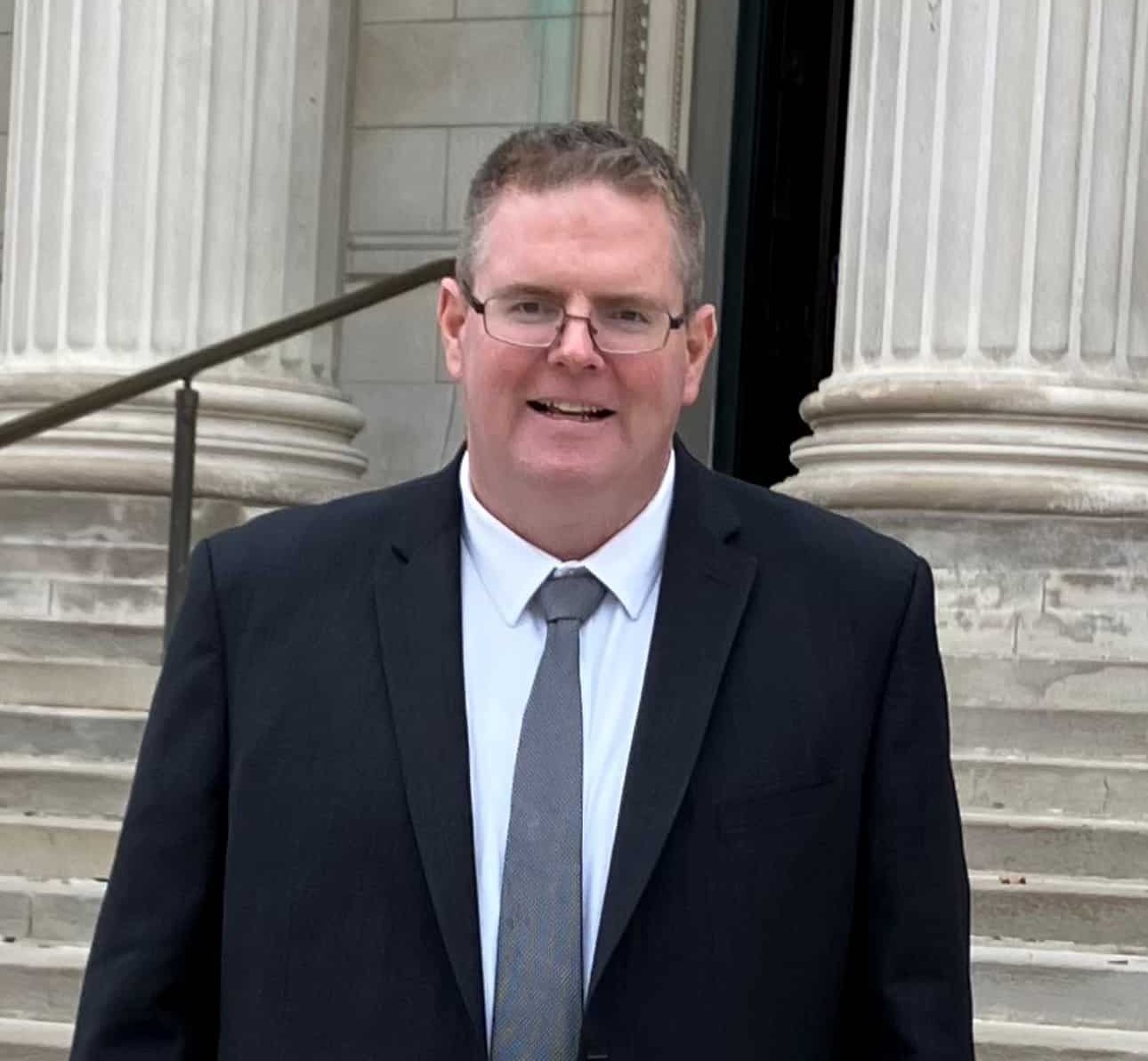
City Councilor Sean Curran brought the sale of kratom products to the attention of the rest of the council.
Reminder Publishing file photo
SPRINGFIELD — The Springfield City Council took up separate discussions on adult use substances at its Dec. 8 meeting.
While the body unanimously chose to heavily regulate products made from the kratom leaf, it was divided on issues around another plant, marijuana.
Kratom is an evergreen plant that grows in Southeast Asia. The federal Drug Enforcement Administration has reported, “At low doses, kratom produces stimulant effects with users reporting increased alertness, physical energy and talkativeness. At high doses, users experience sedative effects.” The DEA states that kratom is highly addictive and can produce hallucinations, delusions and confusion.
The most potent forms of kratom are found in extracts or synthesized to be far more powerful than the powdered leaf form. Sold under names like 7 O’Heaven, Roxy, Dozo Perks and Zohm, synthetic kratom is known by the nickname “gas station heroin.” Because the products are not regulated by the Controlled Substances Act, there is no minimum age to purchase them in most places.
In mid-November, City Councilor Sean Curran brought the sale of kratom products to the attention of the rest of the council after learning about their effects from a faculty member at the University of Connecticut. At the Dec. 8 meeting, Councilor Malo Brown thanked Curran for “taking on this charge,” while Councilor Victor Davila called the regulations “one of the most important pieces of legislation we have passed this year.” He said, “This is certainly going to save lives.”
Under the regulations, kratom products cannot be sold to individuals under 21 years old, must have clear labels listing the ingredients and be kept behind the counter at retailers. The ordinance prohibits the manufacture, distribution or sale of synthetic kratom, kratom leaf extract, products that can be vaporized, aerosolized or injected, or kratom in food and drink products. It also bans products with enhanced strength and altered taste or odor. The products must not mimic candy, be marketed to people under age 21 or be sold in packaging that is not child resistant.
Each violation of the ordinance will result in a $300 fine and confiscation of the product. The second violation within 36 months comes with a seven-day business suspension of any Health and Human Services permit. A third violation increases the suspension to 30 business days. Violations may also trigger revocation of permits. Violations can be appealed before the Board of Health.
Curran said enforcement will be a “challenge” but that kratom will likely be added to gas station compliance checks for the illegal sale of alcohol and tobacco products. The ordinance will need a second vote by the council before it can be enacted.
Cannabis
Moving on, the council discussed proposed changes to the city’s cannabis ordinances to bring them in line with the state’s regulations. One of the proposed changes would alter the way the buffer zone between dispensaries and schools is determined. As it stands, the city requires 500 feet between the property line of a dispensary and the property line of a school. The state’s most current regulations require 500 feet between the entrance to a dispensary and that of a school.
Most councilors rejected this change, which could affect future dispensaries, bringing them closer to schools. One currently operating dispensary made clear its hopes to use the change to expand its parking lot and property size. Ryan McCollum represents EMBR, 461 Boston Road, and said the dispensary is actively working with Councilor Lavar Click-Bruce, the Planning Department and the city to address traffic concerns. The dispensary owns an adjacent parking lot but cannot expand its customer parking because it is within 500 feet of Balliet Elementary School.
Anthony Wilson said he represents several other dispensaries in Springfield. He said the other dispensaries are busy but do not have the traffic issues seen at EMBR. “This is not a location issue. This is a management issue,” Wilson said. He opined that allowing the dispensary to expand its parking would be “bringing the problems closer to their neighbors.”
Similarly, Payton Shubrick, CEO and founder of the dispensary 6 Bricks, said the city’s other dispensaries considered traffic and parking when choosing a location. She recommended reviewing EMBR’s traffic study.
McCollum insisted that Shubrick’s and Wilson’s remarks were based on resentment because his client had become so successful. “Doing well shouldn’t be penalized,” McCollum said. He also addressed concerns from some councilors that the dispensary’s customers were using the product in the parking lot. He said the business had hired security to patrol the property and ensure that behavior was not taking place.
Councilor Tracye Whitfield said she and Click-Bruce attended a neighborhood meeting at the school to discuss the traffic congestion and lack of parking, which she said leads people to park on Boston Road. “This is what the neighborhood wants,” she said of more parking at the site.
According to previous MassLive reporting from Jeanette DeForge, 35 people attended the first community meeting on Oct. 29 at Balliet School to air their concerns about EMBR. At that meeting, many of the attendees expressed concerns about traffic and people smoking in the parking lot since EMBR opened in November 2024. Residents brought suggestions to move the bus stop in front of the store as well as to move the entrance and exit to Boston Road from Fargo Street. Residents also requested that EMBR hire police on location, specifically for its busiest days on Thursday, Friday and Saturday.
Police Lt. Jamie Bruno also urged residents to call 911 if there are issues with people in the parking lot. He said, “If we don’t know these things we can’t address them.”
Councilor Jose Delgado said the issues seem to be resulting from a bottleneck, rather than mismanagement. Moreover, he said, “It’s really about listening to the residents.” Brown spoke against the ordinance change and said he had heard from “hundreds” who did not want the dispensary’s parking any closer to the school.
“We have a responsibility to the whole city,” Councilor Kateri Walsh said, adding that they cannot make decisions based on what people in one neighborhood might want. Whitfield pushed back on that, saying, “We make decisions about neighborhoods all the time.”
The council closed the public hearing but ran out of time before a vote could be taken. The matter was scheduled to be picked up at the Dec. 15 meeting.
Editor’s note: This article has been updated to include additional information about a community meeting hosted on Oct. 29 to address complaints about EMBR including parking and people smoking in its parking lot.
