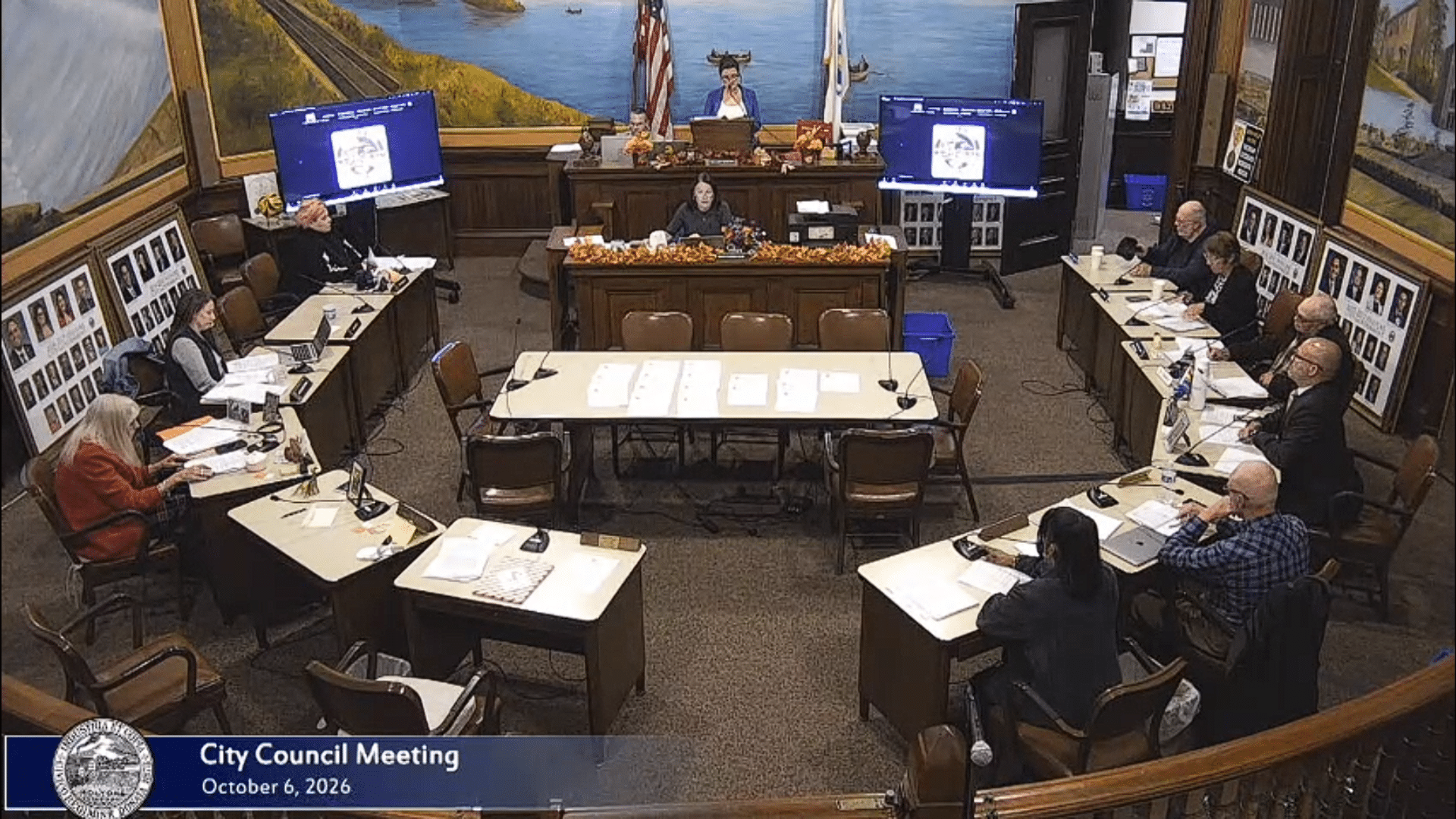
The City Council approves changing the city calendar to recognize Indigenous Peoples’ Day instead of Columbus Day during its Oct. 6 meeting.
Photo credit: Holyoke Media
HOLYOKE — If you live in the city of Holyoke, Columbus Day will now be recognized as Indigenous Peoples Day in the city’s calendar after the City Council approved the change during its Oct. 6 meeting by a 9-3 vote.
Although Columbus Day is observed on the second Monday of October and is recognized as a federal and a state holiday in Massachusetts, many city councilors and residents expressed a need to remove the name of the holiday due to stories of how Christopher Columbus treated those who occupied the land after he arrived.
Indigenous Peoples Day is not a federal holiday but there are 17 states and many other cities and school systems who either replace or coincide Indigenous Peoples Day with Columbus Day.
The Ordinance Committee approved the order with a 4-1 vote before sending it before the full City Council.
City Councilor Meg Magrath-Smith, who chairs the Ordinance Committee, said the approved ordinance will change the city calendar sections that name Columbus Day and replace it instead with Indigenous Peoples Day.
“I know we heard a number of folks in public comment tonight; similar arguments were made by folks in support wanting to see Indigenous Peoples Day center around Indigenous people and allowing the Columbus Day holiday to lapse,” Magrath-Smith explained. “The other argument that was made was of course in support of the Italian American community and in support of Columbus as a historical figure and wanting to see perhaps both maintained rather than just Indigenous Peoples Day replacing Columbus Day.”
City Councilor Michael Sullivan, who voted against the change, said he was in favor of Indigenous Peoples Day but was not in favor of replacing Columbus Day completely.
“It’s a state and federal holiday. We took an oath as city councilors to uphold the constitution and the laws of our country and of the commonwealth of Massachusetts,” Sullivan stated. “It’s not up to us to change the laws. If we want to do that, take that sign up there, take it down and put in breakers of law not makers of law.”
City Councilors Howard Greaney Jr. and Linda Vacon, who also voted against the change, said they were not against Indigenous Peoples Day but wanted to see both holidays recognized in the city instead of getting rid of Columbus Day.
Vacon explained that President Franklin Roosevelt championed Columbus Day as a national holiday to remember “our heritage, that we are a country that was founded by explorers and a merging of many people.”
She continued, “We cannot go back to 1492 and fix things that happened then. What we can do is conduct ourselves in the current day in the way that we feel and believe is going to make our culture and our society better. So, to go back today to relitigate things from 1492 is just not possible and I think to attempt to it is to create another fictional narrative.”
There were 50 Holyoke residents who sent in a petition to urge the City Council to recognize both holidays.
City Councilors in support of the change argued that it was important to listen to its residents and adapt to the current times. Many speakers during public comment spoke in favor of the change.
City Councilors Juan Anderson-Burgos and Richard Purcell called Columbus a lost sailor who found land that was already discovered.
“Christopher Columbus didn’t discover anything. That’s like me going into Councilor Sullivan’s home and saying I discovered your home, I’m going to move in now,” Anderson-Burgos stated. “He was treacherous, horrible, killed people, raped people and the list goes on. He wiped out the Indigenous people of this land.”
Purcell said, “Columbus was a lost sailor that came on a land where 40 to 90 million people were already living. He didn’t discover anything. He discovered that he was lost and starving and that started the genocide of 40 to 90 million of what we call the Americas now. It also started the slavery movement because that opened the pathway for people to bring slaves to this country.”
Purcell also pointed out that there are more than two dozen Massachusetts cities and towns including Boston, Cambridge, Newton, Amherst and Northampton, that recognize Indigenous People’s Day.
“Renaming the day is not erasing history, it’s about seeing it clearly,” Purcell stated. “For generations we have honored a man whose arrival set in motion centuries of violence that continues today. It is time we now honor the survivors and the victims of that violence. This change honors Italian Heritage without defending the indefensible.”