
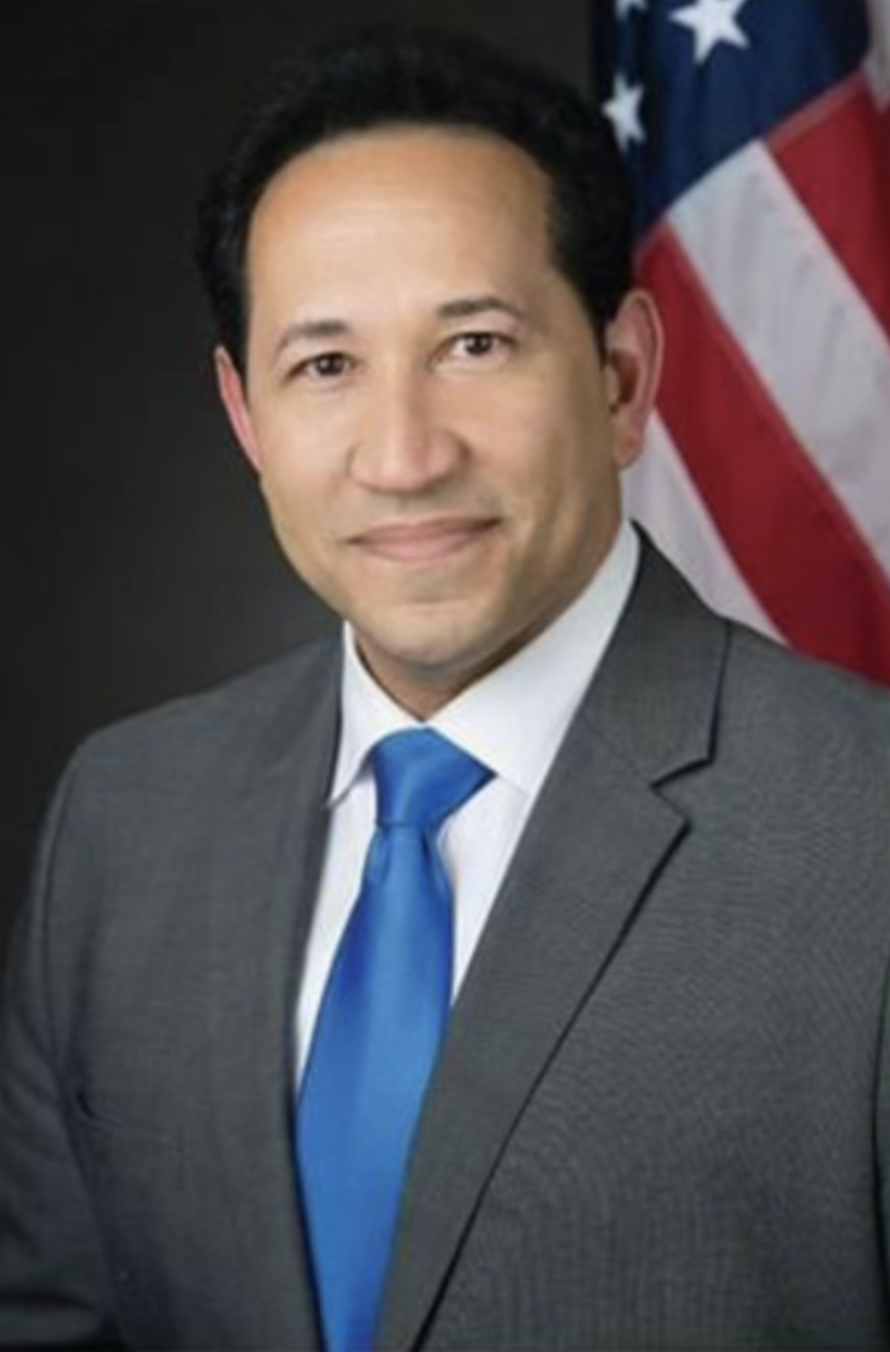
SPRINGFIELD — The Massachusetts Legislature often deals with big-picture challenges, but state Rep. Carlos Gonzalez is thinking small for 2026.
“For the past 10 years, I’ve been trying to codify into law the term ‘microbusiness,’ separately from small business,” said Gonzalez, who represents the state House of Representatives 10th Hampden District.
The district includes the neighborhoods of Brightwood, Memorial Square, Metro Center, the South End and parts of Forest Park and Six Corners.
He explained that to be categorized as a microbusiness under the legislation he filed, an entity would have less than $250,000 in annual net profit and fewer than 10 employees. Sixty-eight percent of businesses in Massachusetts fit this definition, he said. “It’s the fabric of inner cities, like Springfield,” he said.
Gonzalez’s bill H. 3108 would create a tax incentive program to encourage microbusinesses to “hire formerly incarcerated individuals and individuals receiving transitional benefits.”
“We provide tax incentives for small and large-scale businesses, why not microbusinesses?” Gonzalez asked.
A related bill, H. 3111, would establish a fund through which qualifying microbusiness owners would be eligible to loan-to-grant program. If the funds are used for the creation of a business plan, professional development, technology, workforce development, procurement and contracting aid or market research, the loans would be converted to grants and would not need to be paid back.
When a microbusiness opens, Gonzalez said 88% of its employees come from the community where it is located. Further, when microbusiness owners purchase a home, more than 70% buy property in the same municipality as their business. “That’s a huge ROI,” Gonzalez said about the return on investment associated with supporting microbusinesses.
While Gonzalez is passionate about helping microbusinesses, he acknowledged that federal funding cuts may put those goals on the back burner.
“I think the challenges of the budget will supersede any personal priorities of the legislators,” Gonzalez said. He said the number one priority will be to defend and safeguard the Chapter 70 school funding aid, Chapter 90 road aid and funding for public safety.
In the latest state budget, he said Springfield received $545 million in Chapter 70 aid. This covered roughly 80% of the School Department budget, he said. When asked if the Chapter 70 funding formula was working, Gonzalez said it has improved since instituting the Student Opportunity Act, which prioritizes districts with large populations of low-income students, English language learners and students with disabilities.
Meanwhile, for the first time, Springfield got $47 million in unrestricted Chapter 90 funding. Gonzalez said federal cuts to transportation services under President Donald Trump will hurt municipalities in the fiscal year 2027, as will cuts to clean energy programs and healthcare. “It’s an ongoing slaught of ever-changing programs,” Gonzalez said of the funding cuts.

- Sarah Heinonen
- Sarah Heinonen
- Sarah Heinonen
- Sarah Heinonen
- Sarah Heinonen
- Sarah Heinonen
- Sarah Heinonen
- Sarah Heinonen
- Sarah Heinonen
- Sarah Heinonen
- Sarah Heinonen
- Sarah Heinonen
- Sarah Heinonen
- Sarah Heinonen
- Sarah Heinonen
- Sarah Heinonen
- Sarah Heinonen
- Sarah Heinonen
- Sarah Heinonen
- Sarah Heinonen
- Sarah Heinonen
- Sarah Heinonen
- Sarah Heinonen
- Sarah Heinonen
- Sarah Heinonen
- Sarah Heinonen
- Sarah Heinonen
- Sarah Heinonen
- Sarah Heinonen
- Sarah Heinonen
- Sarah Heinonen
- Sarah Heinonen
- Sarah Heinonen
- Sarah Heinonen
- Sarah Heinonen
- Sarah Heinonen
- Sarah Heinonen
- Sarah Heinonen
- Sarah Heinonen
- Sarah Heinonen
- Sarah Heinonen
- Sarah Heinonen
- Sarah Heinonen
- Sarah Heinonen
- Sarah Heinonen
- Sarah Heinonen
- Sarah Heinonen
- Sarah Heinonen
- Sarah Heinonen
- Sarah Heinonen
- Sarah Heinonen
- Sarah Heinonen
- Sarah Heinonen
- Sarah Heinonen
- Sarah Heinonen
- Sarah Heinonen
- Sarah Heinonen
- Sarah Heinonen
- Sarah Heinonen
- Sarah Heinonen
- Sarah Heinonen
- Sarah Heinonen
- Sarah Heinonen
- Sarah Heinonen
- Sarah Heinonen
- Sarah Heinonen
- Sarah Heinonen
- Sarah Heinonen
- Sarah Heinonen
- Sarah Heinonen
- Sarah Heinonen
- Sarah Heinonen
- Sarah Heinonen
- Sarah Heinonen
- Sarah Heinonen
- Sarah Heinonen
- Sarah Heinonen
- Sarah Heinonen
- Sarah Heinonen
- Sarah Heinonen
- Sarah Heinonen
- Sarah Heinonen
- Sarah Heinonen
- Sarah Heinonen
- Sarah Heinonen
- Sarah Heinonen
- Sarah Heinonen
- Sarah Heinonen
- Sarah Heinonen
- Sarah Heinonen
- Sarah Heinonen
- Sarah Heinonen
- Sarah Heinonen
- Sarah Heinonen
- Sarah Heinonen
- Sarah Heinonen
- Sarah Heinonen
- Sarah Heinonen
- Sarah Heinonen
- Sarah Heinonen
- Sarah Heinonen
- Sarah Heinonen
- Sarah Heinonen
- Sarah Heinonen
- Sarah Heinonen
- Sarah Heinonen
- Sarah Heinonen
- Sarah Heinonen
- Sarah Heinonen
- Sarah Heinonen
- Sarah Heinonen
- Sarah Heinonen
- Sarah Heinonen
- Sarah Heinonen
- Sarah Heinonen
- Sarah Heinonen
- Sarah Heinonen
- Sarah Heinonen
- Sarah Heinonen
- Sarah Heinonen
- Sarah Heinonen
- Sarah Heinonen
- Sarah Heinonen
- Sarah Heinonen
- Sarah Heinonen
- Sarah Heinonen
- Sarah Heinonen
- Sarah Heinonen
- Sarah Heinonen
- Sarah Heinonen
- Sarah Heinonen
- Sarah Heinonen
- Sarah Heinonen
- Sarah Heinonen
- Sarah Heinonen
- Sarah Heinonen
- Sarah Heinonen
- Sarah Heinonen
- Sarah Heinonen
- Sarah Heinonen
- Sarah Heinonen
- Sarah Heinonen
- Sarah Heinonen
- Sarah Heinonen
- Sarah Heinonen
- Sarah Heinonen
- Sarah Heinonen
- Sarah Heinonen
- Sarah Heinonen
- Sarah Heinonen
- Sarah Heinonen
- Sarah Heinonen
- Sarah Heinonen
- Sarah Heinonen